
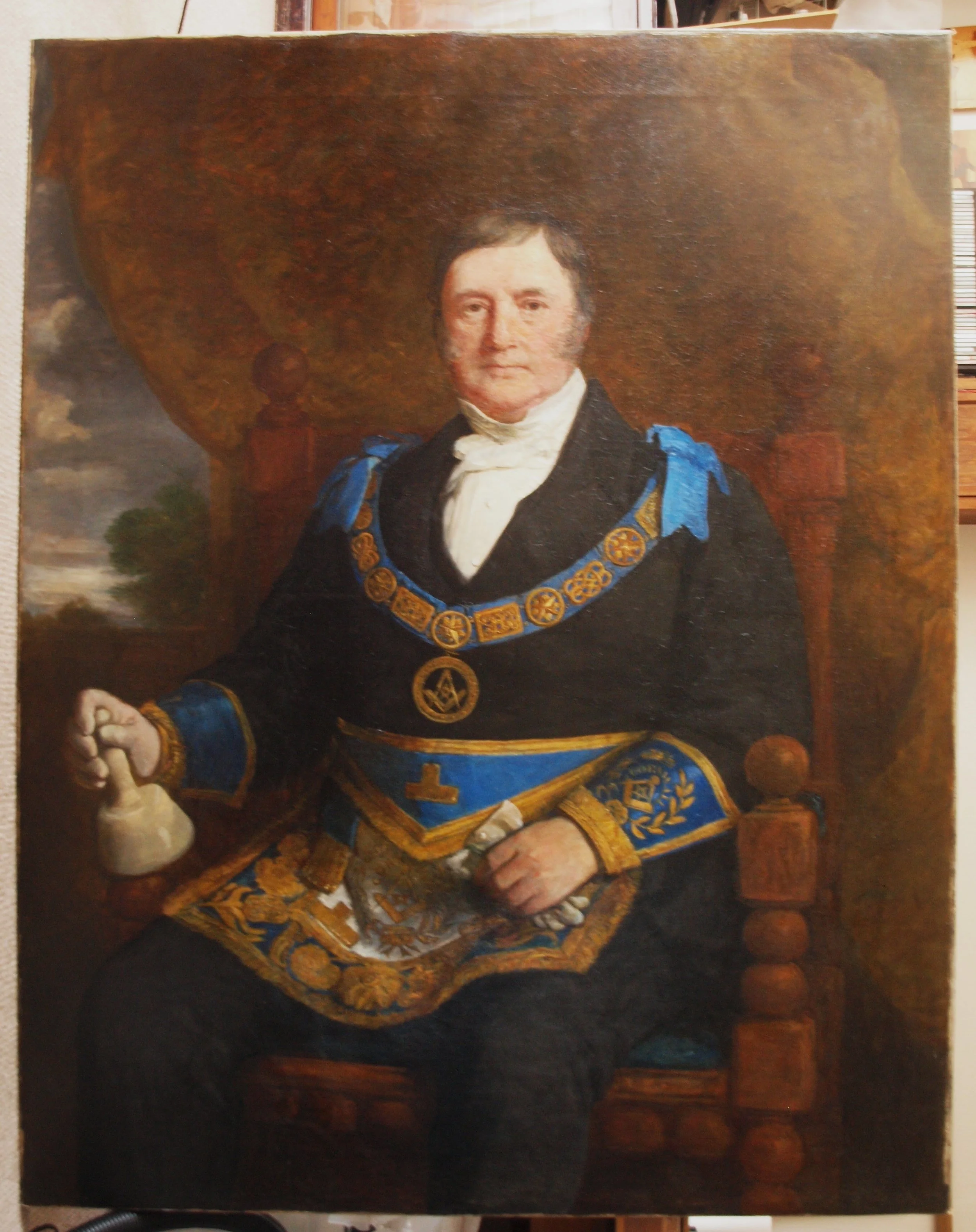
Among the paintings that will go on display in the new Isles of Scilly Museum and Cultural Centre is a large oil portrait of Augustus Smith, Lord Proprietor of the islands from 1834 until his death in 1872.
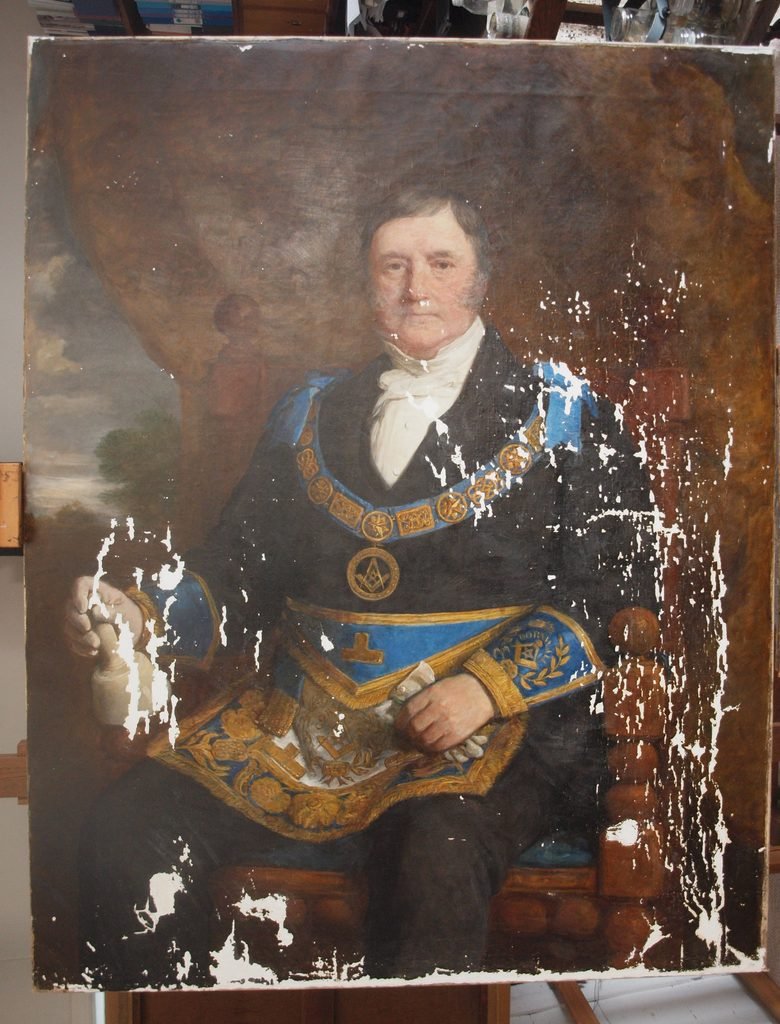
When paintings conservator Alison Smith first assessed it on St Mary's, paint was flaking away across large areas of the canvas. After six months of work over an 18 month period in her Cornwall studio, the portrait is nearly ready to return to the islands.
The man in the portrait
Augustus Smith was born in 1804 into a Hertfordshire banking family and grew up at Ashlyns Hall, near Berkhamsted. In 1834 he took a 99-year lease on the Isles of Scilly from the Duchy of Cornwall. At the time, many islanders lived in poverty, relying on smuggling and salvage from shipwrecks to supplement what they could make from farming and fishing.
Over the following four decades Smith reorganised how land was held, began an ambitious building programme and set about ending smuggling on the islands. He also took a close interest in schooling - he is often credited with charging a penny a week for children to attend school and twopence if they stayed away, making education effectively compulsory long before it was on the mainland. He served as MP for Truro from 1857 to 1865.
On Tresco he built the Abbey and began the gardens that are still one of the best-known parts of his legacy. His letters show how closely involved he was. In September 1861 he wrote that the gardens were now being visited by "excursionists", and passed on the observations of his gardener, Chivers, who found Scottish visitors the most knowledgeable and the Cornish the least, one of whom, shown a botanical rarity, replied: "Well, that's not so good as a cabbage."
The regalia
The portrait shows Smith in full Masonic regalia: a blue collar with a gold chain, a jewel bearing the square and compasses, and a heavily embroidered apron. Smith was Provincial Grand Master for Cornwall from 1863, and the word "Cornwall" appears to be worked into the embroidered cuff on his left arm. The canvas painting is unsigned, 143cm x 112cm in size, and dates from the nineteenth century.
Condition before treatment
Before conservation, the painting had suffered extensive flaking. Paint had lifted and fallen away in many places, leaving the bare canvas exposed, with the worst losses down the right-hand side, along the lower edge and across the sitter's right hand. The surface was also dulled by discoloured varnish and surface dirt.
The extensive paint loss had been caused by the back of the canvas being in contact with water, presumably from a leak above. Staining on the back of the canvas down the right-hand side shows further evidence of this. The water caused the canvas to shrink and softened the ground, resulting in extensive tenting (lifting) of the paint and considerable paint loss.
The conservation work
Alison first stabilised the painting on St Mary's so that it could be safely transported to her studio. There, the work included consolidating the flaking paint to secure it to the canvas, cleaning the surface, filling the areas of loss, and retouching the fills to match the surrounding paint.
Stabilisation of the painting on St Mary’s included a facing; attaching small pieces of non-woven tissue to the face of the painting with wheat starch paste. The paste has a very low tack so is easy to remove with water but when dry is strong enough to hold the loose and lifting paint securely for transport. The painting was packed and transported in a wooden crate on the Scillonian to the conservation studio in Cornwall.
Treatment started with the gradual removal of the tissue, one piece at a time, followed by consolidation of the paint using an acrylic conservation adhesive. The adhesive was introduced under the paint flakes with either a small brush or sometimes by injecting the adhesive beneath the paint with a syringe. After the adhesive was partly dry, the paint was laid down using the hot spatula. Surface cleaning to remove water-based dirt from the surface was carried out at the same time.
After the first round of consolidation, the painting was laid face down and taken off the stretcher to enable work to be carried out on the canvas deformations caused by the water damage. Over a period of 6-8 weeks areas of the canvas were humidified using damp blotting paper and warmed with the larger spatula, often left under weight to dry.
Once there was some improvement on the canvas deformations, a second round of consolidation was carried out, followed by further treatment of the canvas. The tacking margins were strengthened with Holytex (non-woven polyester) and Beva 371 film ( a heat-sealable adhesive) and the painting re-stretched onto the existing stretcher.
The water damage had affected the varnish down the right hand side, leaving the surface looking blanched. Most of this disappeared when the discoloured varnish was removed, although a few patches on the black sleeve remained affected. Varnish removal recovered the original colours of the painting.
Paint losses were filled with acrylic putty and toned with watercolours before the application of a brush varnish. Further retouching was carried out using dry pigments in Laropal A81, a stable synthetic resin.
A new frame in Watts style has been made for the painting’s return to St Mary’s, the original being presumably lost or beyond repair following the water damage.
Back on display
The portrait will be displayed in the new Isles of Scilly Museum and Cultural Centre when it opens in early summer 2027.
Lydia Bassett, director of the Isles of Scilly Museum and Cultural Centre, said: “This portrait will be displayed in our Island Nature gallery alongside our extensive taxidermy bird collection which was gifted to the Museum by the Dorrien- Smith family of Tresco. The collection is one of the real treasures of our Museum and includes 142 taxidermy specimens, some now extinct, collected from 1880 to 1950. The Town Hall on St Mary’s was commissioned by Augustus Smith’s nephew Algernon Dorrien-Smith and the family’s influence on the islands in the nineteenth century changed life on Scilly from the introduction of flower farming to education and the depopulation of Samson.
She added: “One of the joys of this project has been working with specialist conservators to bring some of the most neglected items in our Museum collection back to life. A huge amount of professional restoration work has been done on our paintings and textiles collections as well as cased taxidermy birds and other key items. Everyone at the Museum has their favourite and mine has been the work done on restoring two 18th century clarinets and our Serpent instrument to a point where they have been able to be played for a recording in our Island Spirit gallery.”
This conservation work was made possible thanks to the Museum’s funding from the National Lottery Heritage Fund, and forms part of the extensive plans for bringing the Museum back to life in a new home.